What is the cloud? | Cloud definition
“The cloud” refers to servers accessed over the Internet, and the software and databases that run on those servers. Cloud servers are located in data centers all over the world. By using cloud computing, users and companies do not have to manage physical servers themselves or run software applications on their own machines.

The cloud enables users to access the same files and applications from almost any device, because the computing and storage take place on servers in a data center, instead of locally on the user device. This is why a user can log in to their cloud email providers like Gmail or Microsoft Office 365, and with cloud storage providers like Dropbox or Google Drive.
For businesses, switching to cloud computing removes some IT costs and overhead: for instance, they no longer need to update and maintain their own servers, as the cloud vendor they are using will do that. This especially makes an impact for small businesses that may not have been able to afford their own internal infrastructure but can outsource their infrastructure needs affordably via the cloud. The cloud can also make it easier for companies to operate internationally, because employees and customers can access the same files and applications from any location.
NIST defines cloud computing as:
Cloud computing is a model for enabling ubiquitous, convenient, on-demand network access to a
shared pool of configurable computing resources (e.g., networks, servers, storage, applications, and
services) that can be rapidly provisioned and released with minimal management effort or service
provider interaction.
The ISO/IEC definition is very similar:
Paradigm for enabling network access to a scalable and elastic pool of shareable physical or virtual
resources with self-service provisioning and administration on-demand.
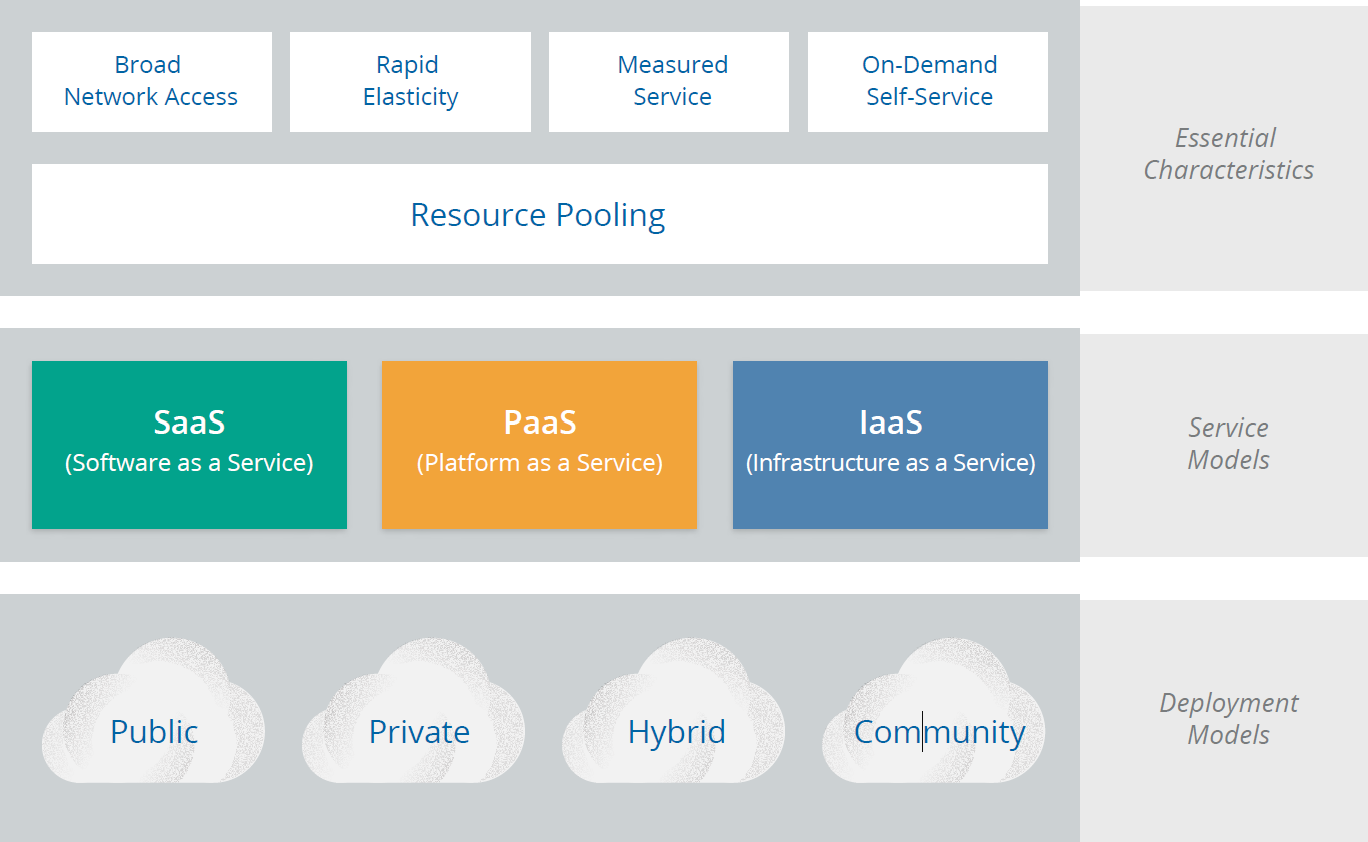
NIST defines cloud computing by describing five essential characteristics, three cloud service
models, and four cloud deployment models. They are summarized in visual form below
Discover a world of possibilities
Welcome to a world of rapidly increasing security posture & aligning security to business priorities, where the journey is to Guide organizations through an end-to-end security modernization from strategy and program level through architecture and technical planning using Zero Trust principles The only limit is the extent of your imagination. Navigating security intricate fabric, Provide best practices, references, and other guidance based on real-world lessons learned for
Strategy and Program (CISO Workshop)
Architectures and Technical Plans
Security Capability Adoption Planning
Cloud Estate Evaluation
Strategic Planning for the advancement of cloud infrastructure.
Verify conformity with the aims and goals of the business.
Create cloud architectures that are safe, scalable, and resilient.
Offer best practices and architectural direction for cloud infrastructure.
Adopt and support best security practices within the cloud environment.
Ensure compliance with security standards and regulations.
We have learned you have to be both aspirational and practical on your journey to modernize security – you need a clear direction to work in and incremental steps to execute each day.

 Ayo Dada's Blog